

What Is Hibiscus Tea? The Ruby-Red Flower Behind Radiance and Harmony Hibiscus
Updated: Oct 3
There's a particular kind of magic to watching a pale, dried flower turn a cup of hot water into something the colour of a ruby. It happens every time with hibiscus, and it's worth knowing exactly what's going on in the cup - because hibiscus is one of the more interesting characters in the tea world, with a story that stretches from West Africa to the Caribbean to Mexico.
What exactly is hibiscus tea?
Hibiscus tea isn't tea at all, technically speaking - it's a herbal infusion, or tisane, made from the calyces of Hibiscus sabdariffa, sometimes called roselle. The calyx is the papery, petal-like casing that forms around the seed pod once the flower itself has dropped away. It's this part that's harvested, dried and steeped, which is why dried hibiscus looks more like a deep red, slightly leathery petal than a whole flower.
A drink with a long history
Hibiscus has been part of daily life across West Africa, the Caribbean, Mexico and parts of the Middle East for generations, under a handful of different names. In West Africa it's bissap, often served ice-cold and lightly sweetened. In the Caribbean it's sorrel, a Christmas-time tradition spiced with ginger and cloves. In Mexico and Central America it's agua de jamaica, a fixture at taquerias and family tables alike. Different names, same tart, ruby-red flower doing the work.
What hibiscus brings to the cup
Flavour-wise, hibiscus is tart and fruity, closer to cranberry than anything you'd call floral - it's got a genuine sharpness that mellows beautifully with a touch of honey if you'd like it. That deep red colour comes from anthocyanins, the same family of plant pigments responsible for the colour of red cabbage and blueberries. Hibiscus is also naturally high in vitamin C and beta-carotene.
Hibiscus has attracted a fair bit of scientific interest over the years, including clinical studies looking at its relationship with blood pressure. We'd rather be upfront than sensational about this: research in this space is ongoing and mixed, a cup of tea is never a substitute for medical advice, and we don't make health claims about our blends. What we can say with confidence is that it tastes wonderful and looks even better.
How we use it - Radiance and Harmony Hibiscus
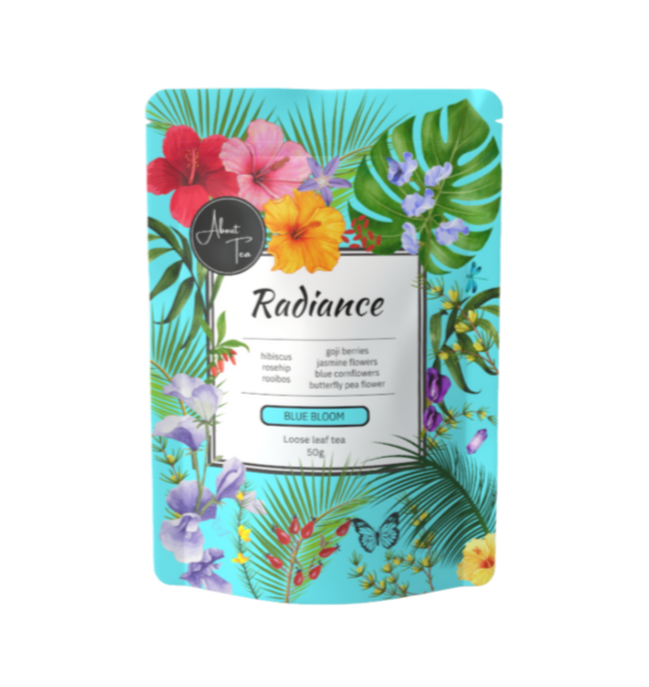
Hibiscus shows up in two About Tea blends, each taking it somewhere different. Radiance pairs hibiscus with butterfly pea flower, rosehip, rooibos and goji berries - a vibrant, colour-shifting infusion that goes from deep blue-violet to a rosy pink the moment the hibiscus and rosehip start to steep. It's naturally caffeine-free and just as lovely served over ice.
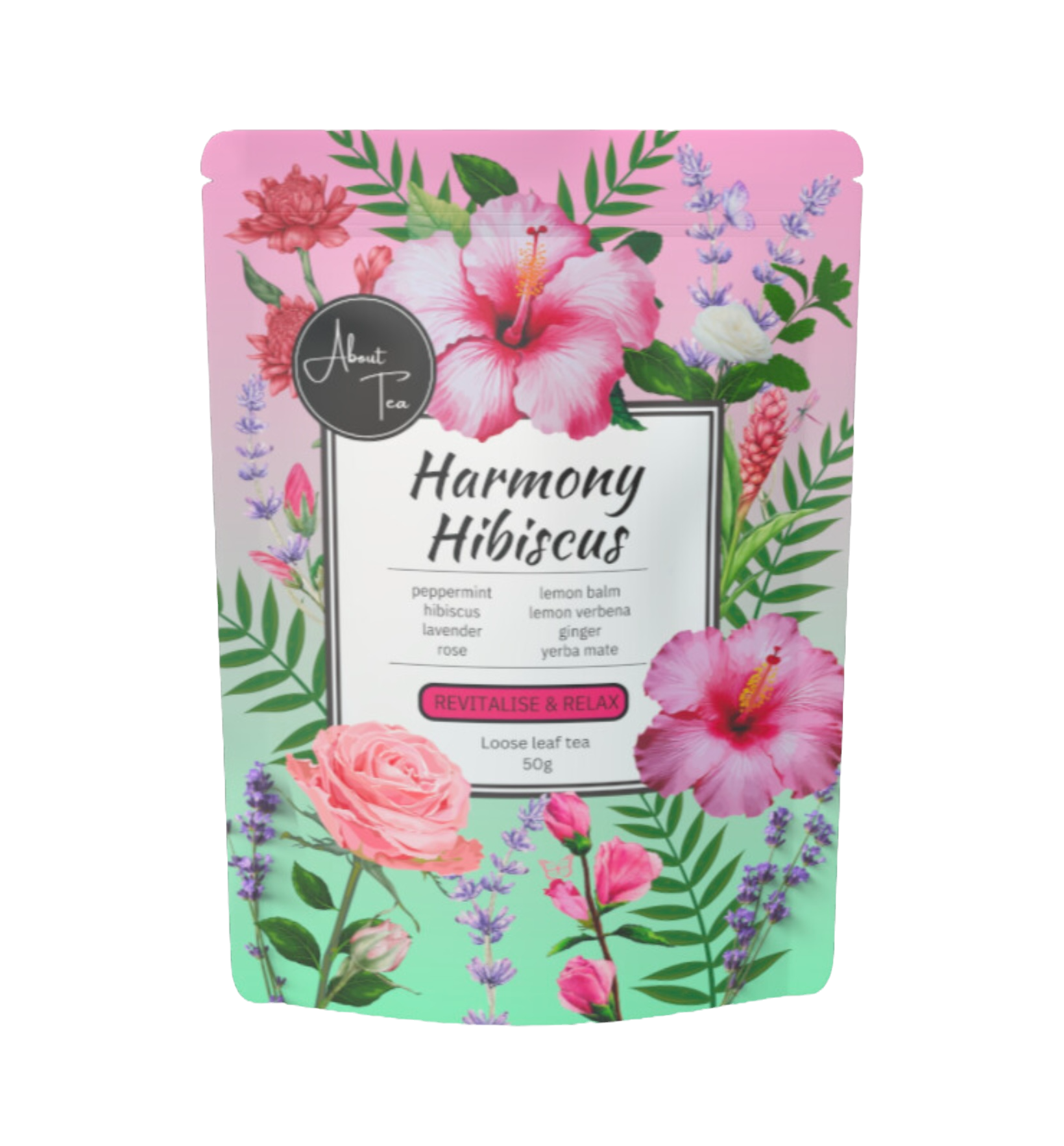
Harmony Hibiscus takes a different approach, pairing hibiscus and rose with yerba mate, ginger, lavender and lemon balm. It's worth knowing this one isn't caffeine-free - the yerba mate sees to that - which makes it a lovely mid-morning or afternoon cup rather than a bedtime one. Have a browse of the full range of blends to see which one suits your afternoon.
How to brew it
Hibiscus is forgiving to brew. For a hot cup, steep for five to eight minutes in freshly boiled water - the longer you leave it, the deeper the colour and the tarter the flavour, so it's worth experimenting to find your spot. For something cooling as the weather warms up, let it steep, then pour over ice, or cold-brew it in the fridge overnight for a softer, less sharp result.
That's really the appeal of hibiscus: a flower that's been steeped, sipped and passed down through kitchens on several continents, doing exactly the same striking thing in every one of them. If you haven't tried it yet, Radiance and Harmony Hibiscus are both a good place to start.
Enjoy!
Natasha


Comments