

From Cup to Compost: Can You Actually Compost Tea Leaves?
Spring officially arrives in Australia on the first of September, which means garden beds everywhere are about to wake up again. It felt like a good moment to answer a question people ask us more often than you'd expect: what do you actually do with your tea leaves once the pot's empty?
Can you compost tea leaves?
Short answer: yes, happily. Loose-leaf tea is just dried plant material - leaves, flowers, roots, peel or spices, depending on the blend - which makes it exactly the kind of nitrogen-rich “green” matter a compost bin is built to handle. Once it's done its job in the pot, it breaks down in a home compost heap, a worm farm or a council green waste bin much like any other kitchen scrap.
There are a couple of things worth knowing before you start tipping the teapot straight onto the garden bed, though.
Why loose-leaf tea has the edge over a lot of tea bags
Plenty of everyday tea bags contain some plastic — a fine nylon or PET mesh that gives pyramid-style bags their shape, or a thin heat-seal on flatter ones. That mesh doesn't break down in a compost bin, and it won't fully disappear in soil either. A 2019 study from McGill University went further, finding that steeping a single plastic tea bag at brewing temperature released billions of microscopic plastic particles into the cup itself, not only into whatever was left over afterwards.
Not every tea bag is guilty of this - plenty of brands now use unbleached paper or plant-based mesh that composts perfectly well - but if you're not sure what a bag is made from, it's worth checking before it goes anywhere near your compost. If in doubt, empty the leaves out and bin the bag itself.
Loose-leaf tea sidesteps the guesswork entirely, simply because there's no bag involved. What goes into the pot is what comes back out: leaves, petals and botanicals you can identify by sight, with nothing synthetic to fish out afterwards.
What to actually do with your spent leaves
Once a blend has given you its last cup, the leaves still have a little left to give:
Straight into the compost bin or heap, mixed through with your other everyday “greens” and “browns”.
Scattered as mulch around acid-loving plants such as camellias, azaleas, roses and blueberries.
Worked sparingly through a worm farm - tea is mildly acidic, so add it in small amounts alongside other scraps rather than all at once.
Mixed into potting mix for indoor plants, a spoonful or two at a time.
Into the green waste bin if home composting isn't an option — it breaks down just the same at the other end.
A blend built for the full cycle
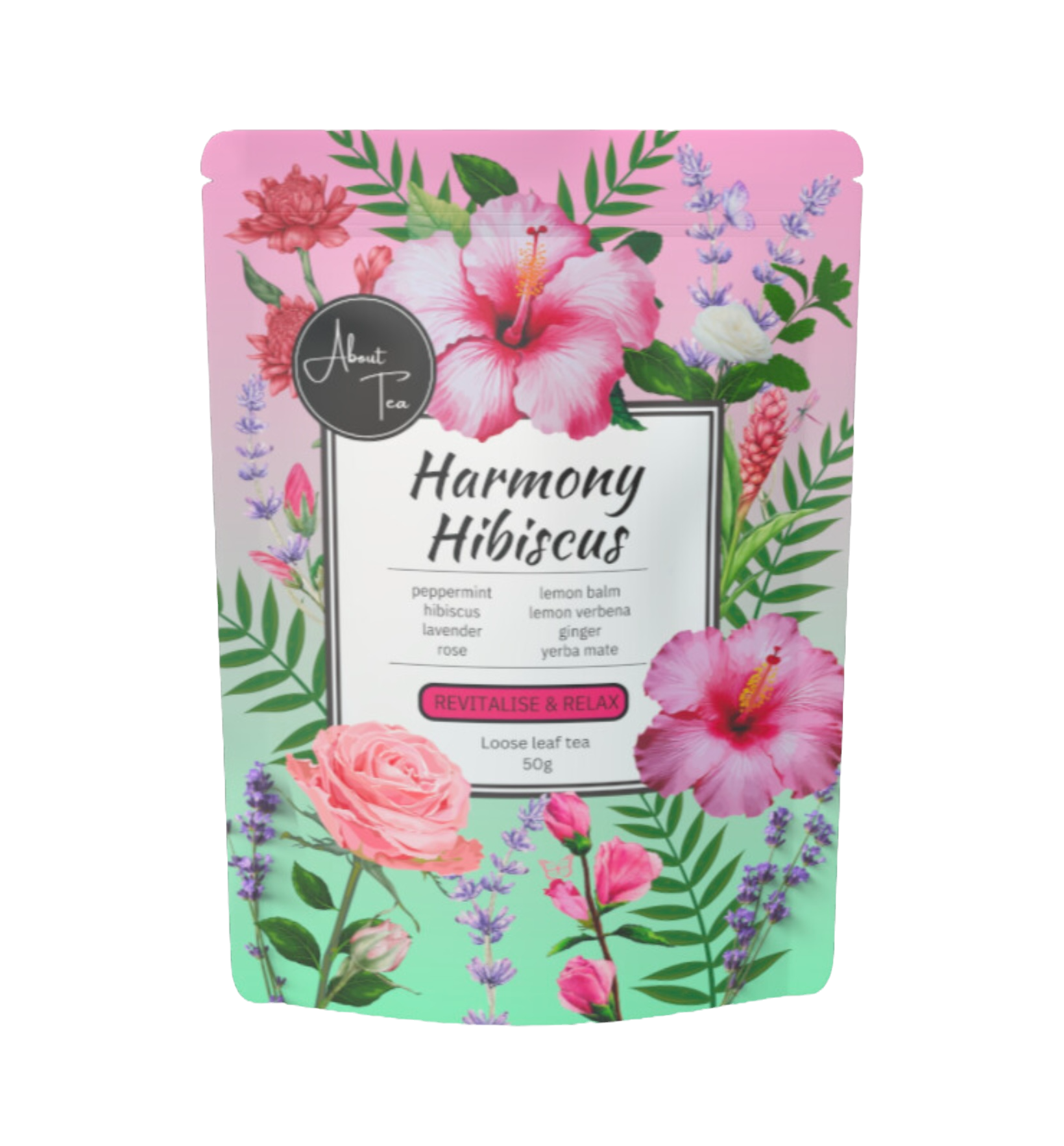
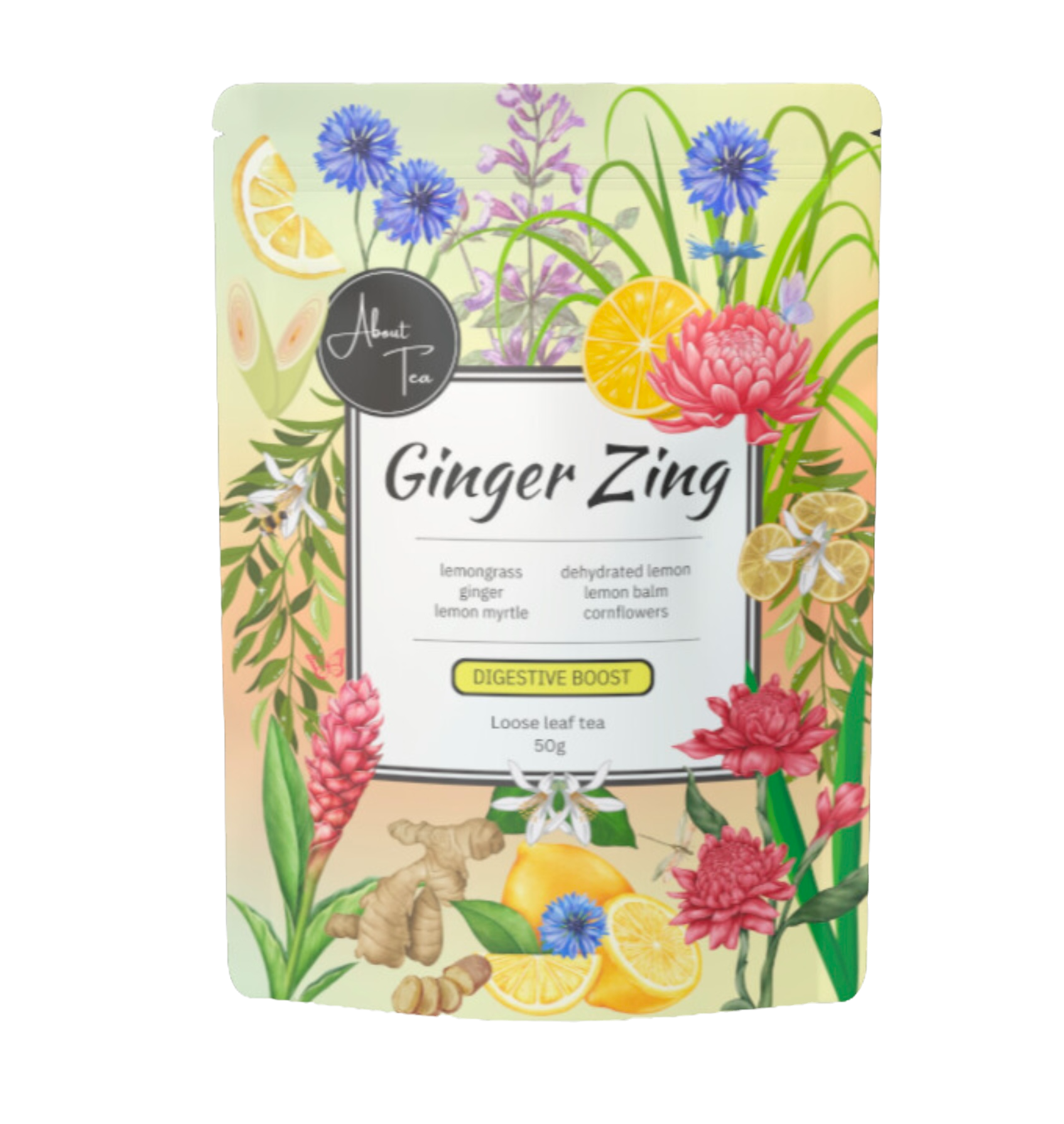
Because every About Tea blend is loose-leaf, whatever's left in your strainer after brewing is genuinely just plant material - nothing to sort out, nothing left over that can't go back into the ground. Harmony Hibiscus, with its hibiscus, rose and lavender, leaves behind a strainer full of colour that looks almost as good in a garden bed as it did in the cup. Ginger Zing - lemongrass, ginger, lemon and cornflowers - is much the same story: brew it, drink it, then let it finish the job it started in nature.
That's really the idea behind a cup of About Tea: take something beautiful from nature, enjoy it properly, and let it find its way back. If you haven't brewed loose-leaf before, it's a small change with a genuinely satisfying full stop at the end - have a browse through our blends and see which one earns a spot in your compost next.


Comments